Source Industrial Pocket Air Filter Bag for Cement, Steel, and Food
Compare 17 industrial pocket air filter bag options from verified Chinese manufacturers. These polyester and non-woven units suit cement, metal, and food applications with customizable sizes and high-temperature resistance; compare the available evidence and request quotations based on your requirements.
Key considerations
Products List



Comprehensive Sourcing Guide
Industrial Pocket Air Filter Bag Sourcing Guide
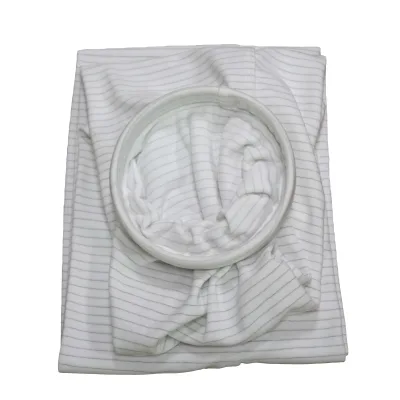
Procuring industrial pocket air filter bags requires a precise understanding of material compatibility and operational environment. Buyers must first identify the specific dust characteristics, such as particle size and chemical composition, to select the appropriate filtration grade. The supplied data indicates that microfiber and non-woven polyester fiber are common medium materials, offering a balance between filtration efficiency and airflow resistance. Understanding these material properties is essential for ensuring that the filter bag can withstand the mechanical stress of continuous operation while maintaining high dust holding capacity.
The structural design of the filter bag, including its sectional shape and installation method, plays a critical role in system performance. Round bags are the standard configuration, often installed via vertical lifting mechanisms in both blowback and pulse dust collectors. Buyers should verify that the bag’s bottom structure, typically round but customizable, aligns with the housing dimensions. This alignment ensures a secure seal and prevents bypass, which is crucial for maintaining the integrity of the filtration process in demanding industrial settings like cement, metal, and pharmaceutical manufacturing.
Product Scope and Observed Listing Signals
The market for industrial pocket air filter bags presents a wide range of product variations, with observed prices spanning from $0.5 to $90,000 USD. This broad spectrum reflects differences in material quality, filtration grade, and customization levels. Buyers should note that the minimum order quantity (MOQ) typically ranges from 1 to 100 units, allowing for flexible procurement strategies. The presence of models like FC1017-72 and FB004 suggests a standardized product line, while the availability of customization indicates that suppliers can tailor dimensions and materials to specific client needs.
Listing signals also highlight the importance of packaging and origin in the sourcing decision. Products are often packed in cartons or plastic bags within cartons, with some suppliers offering standard export packing to ensure safe transit. The origin is predominantly China, with specific mentions of Shanghai as a production hub. Buyers should evaluate these logistical details alongside product specifications, as packaging quality can impact the condition of the filter bags upon arrival. Understanding these market signals helps in setting realistic expectations for delivery times and product availability.
Technical Specifications to Verify
When evaluating technical specifications, the filtration grade is a primary consideration, with options ranging from medium filter to ULPA filter. Buyers must match the filtration grade to the required air quality standards, ensuring that the selected bag can capture the target particulate matter effectively. The gram weight of the filter cloth, typically between 20-260 GSM, is another critical parameter. A higher gram weight, such as the normal 500 gms mentioned, often correlates with greater durability and dust holding capacity, which is vital for long-term operational efficiency.
The working temperature and environmental conditions are equally important for selecting the right filter bag. The supplied data indicates a working temperature range of 80-90 degrees Celsius, with options for high-temperature and room temperature environments. Buyers should verify the specific temperature limits of the material, such as polyester or microfiber, to prevent degradation. Additionally, special treatments like PTFE membrane, singeing, and water and oil repellent coatings can enhance performance in harsh conditions, so these features should be confirmed based on the specific application requirements.
Compliance and Safety Documentation
Compliance with safety and environmental standards is essential for industrial air filtration systems. Buyers should request documentation that verifies the filter bag’s compliance with relevant industry regulations, although specific standard names are not provided in the current data. It is crucial to ensure that the materials used, such as non-woven polyester fiber, do not pose health risks during handling or disposal. Suppliers should provide material safety data sheets (MSDS) to confirm the chemical stability and safety of the filter media, especially when used in food or pharmaceutical applications.
Documentation should also cover the manufacturing process and quality control measures. Buyers need to verify that the filter bags are produced in facilities that adhere to good manufacturing practices. This includes checks on the needle non-woven polyester fiber production and the finish treatments applied, such as PTFE coating. Ensuring that the supplier has a robust quality management system in place helps mitigate the risk of defects and ensures consistent performance across batches. This documentation is vital for audits and regulatory inspections in regulated industries.
Cost Drivers and Commercial Terms
Several factors influence the cost of industrial pocket air filter bags, with material composition and customization being primary drivers. The use of high-performance materials like microfiber or specialized treatments such as PTFE membrane can increase the unit price. Buyers should also consider the impact of custom sizes and shapes on cost, as non-standard dimensions may require additional tooling or production adjustments. The observed price range of $0.5 to $90,000 USD reflects these variables, with higher costs associated with complex specifications and premium materials.
Commercial terms, including MOQ and packaging, also affect the total cost of ownership. While MOQs are generally low, ranging from 1 to 100 units, bulk purchases may offer volume discounts. Packaging options, from standard cartons to customized solutions, can impact shipping costs and product protection. Buyers should negotiate terms that balance cost efficiency with quality assurance, ensuring that the supplier provides adequate protection during transit. Clear communication of requirements and expectations helps in avoiding hidden costs and ensures a smooth procurement process.
Supplier Qualification and Quality Control
Supplier qualification is a critical step in ensuring the reliability of industrial pocket air filter bags. Buyers should assess the supplier’s production capabilities, including their ability to customize sizes and materials as needed. The presence of specific models and standardized products indicates a level of manufacturing maturity, but buyers should also verify the supplier’s capacity for handling custom orders. This includes evaluating their design support and technical assistance, which can be valuable for optimizing filter bag performance in specific applications.
Quality control measures should be rigorously evaluated to ensure consistent product quality. Buyers should inquire about the supplier’s testing protocols, including checks on filtration efficiency, airflow resistance, and durability. The use of advanced manufacturing processes, such as needle non-woven production and specialized finish treatments, should be accompanied by strict quality checks. Suppliers should provide evidence of their quality management systems, including certifications and audit reports, to demonstrate their commitment to producing high-quality filter bags that meet industry standards.
Long-Term Procurement Checks
Long-term procurement success depends on establishing a reliable supply chain and maintaining consistent product quality. Buyers should conduct regular performance reviews of the filter bags in operation, monitoring metrics such as pressure drop and filtration efficiency. This data can help identify any degradation in performance and inform decisions about replacement schedules or material upgrades. Building a strong relationship with the supplier can facilitate better support and faster resolution of any issues that arise during the product’s lifecycle.
Continuous improvement and adaptation to changing industry standards are also key considerations. Buyers should stay informed about advancements in filter bag technology, such as new materials or treatments that offer improved performance. Engaging with suppliers for feedback and suggestions can lead to innovative solutions that enhance operational efficiency. By maintaining a proactive approach to procurement, buyers can ensure that their industrial air filtration systems remain effective and compliant with evolving regulatory and environmental requirements.
FAQs
What materials are used for industrial pocket air filter bags?
Industrial pocket air filter bags typically use polyester or microfiber materials. Some products feature non-woven polyester fiber with needle felting. The fabric weight usually ranges from 20 to 600 grams per square meter depending on the specific application requirements.
Can the size of the filter bag be customized?
Yes, the length and diameter of the filter bag can be customized to fit specific dust collector housings. Standard export packing is available, but custom sizes and materials are also offered to meet unique operational needs for various industrial environments.
Which applications are suitable for these polyester dust filter bags?
These bags are suitable for cement, metal, wood, iron, steel, pharmacy, and food industries. They function effectively in both blowback and pulse dust collectors. The design supports high-temperature environments and room temperature operations alike.
How is the filter bag installed in the dust collector?
The cartridge installation method involves vertical lifting for proper placement. The filter type is positioned outside the filter housing structure. This design ensures efficient dust collection while maintaining structural integrity during the filtration process.
What special treatments are applied to the filter cloth?
Special treatments include singeing, PTFE coating, and water and oil repellent finishes. Some products feature a PTFE membrane for enhanced performance. These processes improve durability and filtration efficiency for demanding industrial dust collection applications.
What is the typical working temperature range for these bags?
The typical working temperature range is between 80 to 90 degrees Celsius. Some variants are designed for high-temperature environments while others operate at room temperature. This flexibility allows them to serve diverse industrial sectors effectively.
What is the minimum order quantity for these filter bags?
The minimum order quantity ranges from 1 to 100 units depending on the supplier. Customization options are available for various specifications. Buyers can negotiate based on their specific volume requirements and customization needs for the project.